3D Life

Because problems don’t stay in one dimension.

MindBodyLife

Why three dimensions

The anxiety shows up in the mind, but it arrives as a stomach that won’t settle and a 3am that won’t end — that’s the body. And it gets costly in the third dimension: the invitations declined, the conversation avoided, the promotion not applied for. That’s life.

Treat one dimension and you get partial relief. Sleeping tablets against a mind that hasn’t stopped predicting disaster. Positive thinking against a nervous system that has been braced for eleven months. The work has to reach all three, because that’s where the thing actually lives.

Mind. Body. Life. That’s the whole idea, and it’s the name.

Nothing about you is broken.

Your brain is doing what it evolved to do, extremely well, in a situation it was never designed for. That’s a different problem, and a much more solvable one.

Explanation is half the treatment.

People carry an enormous amount of shame about symptoms that are, mechanically, completely ordinary. A lot of what we do in the first introductory session is hand that shame back.

Forwards, not backwards.

You can tell us as much history as you want to, but the work doesn’t depend on excavating it. Where something genuinely needs specialist care, we’ll say so and help you find it.

Small and repeatable beats big and heroic.

Everything we ask you to do between sessions has to survive a bad week. If it needs a free afternoon, we’ve designed it wrong.

The goal is not to need us.

Eight to ten sessions for most things — not everyone comes weekly. We’d rather say that plainly than sell you an open-ended relationship. It’s a pattern, not a promise — results vary, because most of what works happens in the rest of the week rather than with us.

Who we are

Three therapists, working online across the UK and in person across Kent, Essex and Surrey.
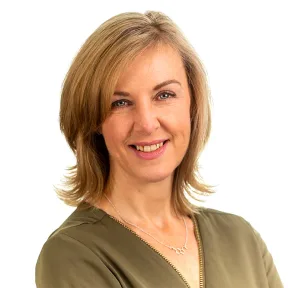
Claire Noyelle

Bearsted, Kent · and online

Claire is a solution-focused therapist with a background in pharmacy, combining healthcare knowledge with a compassionate, person-centred approach to positive change.

She specialises in supporting people who want to reduce their reliance on medication, particularly around pain, mental health and addiction. Over 30 years in NHS pharmacy give her a deep understanding of medication and healthcare, and more than ten years of therapy practice let her work with the thoughts, emotions and behaviours that shape wellbeing. Where reducing medication is appropriate, she works alongside your existing healthcare support.

As the mother of a child with additional needs, Claire has a particular passion for working with teenagers, especially those with a neurodivergent diagnosis — a calm, non-judgemental space where young people build confidence and find strategies that work for them.

07712 220880 · WhatsApp Claire

  • “My first initial session with Claire was so eye opening. With all my issues I was having Claire was able to clearly give me a structured plan and route to get better with a few daily practices to help support my mind and my stress.”

    James · Google review

  • “She has an ability to make everything simple again when perhaps it all seems so confusing. … Each session provides a gentle uplift and with encouragement a new way of thinking.”

    William · Google review

  • “Within that time I have rediscovered my self worth in a way that I hadn’t before seen possible, I’m in a new job with a new relationship and making many healthy, well considered decisions.”

    Bobby · Google review

Dawn Ibbetson

Chelmsford, Essex · and online

Dawn spent 20 years in leadership roles in IT and finance, leading teams across global platforms through organisational change in highly pressured environments. After experiencing burnout herself, she retrained in 2020 to help other people with burnout, anxiety and imposter syndrome.

She works with people to manage overwhelm and take back control from stress, anxiety, low confidence and self-limiting beliefs, so they regain the focus to thrive. Alongside one-to-one work she uses what she knows of corporate life to help organisations reduce stress, build resilience and boost confidence in their teams.

She sees people online and in her private home therapy room in Chelmsford, a twenty-minute walk from the city centre — with riverside walks five minutes away if you’d like the scenic route back.

07968 365648 · WhatsApp Dawn

  • “Taking that first step and speaking to someone can feel very daunting, but Dawn made me feel comfortable from my very first session. My life has changed for the better.”

    Sofia · Google review

  • “I previously had issues regulating my emotions but now finally feel in control of my life. … For possibly the first time I feel equipped to deal with the ups and downs and curveballs of life.”

    Fraser · Google review

  • “I came to Dawn for help with my Anxiety and she has completely changed my life and opened my mind up to a new way of thinking and dealing with emotions.”

    Becky · Google review
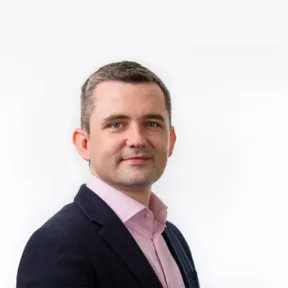
Benn Baker-Pollard

Chiddingfold, Surrey · and online

Benn has led teams since he was 17, in the corporate and public sectors — most recently in a senior leadership role in the country’s largest police service, and leading volunteers in a national ambulance service. Fifteen years in demanding, sometimes life-threatening environments taught him a great deal about managing risk and looking after people under pressure.

He works with adults and young people who feel stuck, often after they have tried other approaches. His particular interests are trauma, stress, anxiety, low mood, men’s sexual difficulties, struggles with sexual orientation, and performance at work.

He sees people online and from his quiet home therapy room in Chiddingfold, within easy reach of Guildford, Godalming and Haslemere.

07476 243670 · WhatsApp Benn

  • “He helped me to understand why my brain was working the way it was, and gave me the guidance I needed to cope. … It was my hour of relaxation and calm, going home feeling happier and more able to cope with my anxiety.”

    Lisa · Google review

  • “Benn is highly emotionally intelligent, calm, patient and understanding. … This was the best investment of my time in my life.”

    Ray · Google review

  • “Ben has helped me no end with sports nerves and generally helped me process things more effectively. He is now helping my daughter with GCSE stress related concerns.”

    Priya · Google review

What stands behind the work

Something worth knowing, because most people don’t: this kind of work isn’t licensed in the UK the way medicine or nursing is. There’s no register you have to be on, and no legal minimum training. Anyone can put up a website.

We don’t think that’s a good enough answer when someone is handing over a difficult year, so we hold ourselves to a standard the law doesn’t ask for. Rather than ask you to take that on trust, here is what it consists of.

Are they properly trained?Yes. Two diplomas each, and we now teach the course.

All three of us trained with the Clifton Practice (CPHT) and hold its DSFH diploma: neuroscience, psychotherapy and solution-focused techniques, with extensive supervised practice with clients.

We then took the HPD, a Level 4 professional qualification accredited by the NCH and NCFE, which adds a portfolio and case studies. We now lecture on that same course at four CPHT schools in Essex, Hertfordshire, Kent and Norfolk, and keep up our own professional development.

What do the letters after their names mean?Each set, in plain words.
Claire Noyelle DSFH · HPD · SFSup · BSc · MRPharmS
The two practitioner qualifications every one of us holds (see Training, above), plus accredited supervisor status — she supervises other therapists. MRPharmS is membership of the Royal Pharmaceutical Society: a practising NHS pharmacist since 1992, which is why she can talk to you about medication in a way most therapists can’t.
Dawn Ibbetson DSFH · HPD · SFH Sup
The two practitioner qualifications every one of us holds, plus accredited supervisor status. Registered with the AfSFH and the CNHC, and a member of the NCH — the bodies that set her standards of practice and hear complaints.
Benn Baker-Pollard DSFH · HPD
The two practitioner qualifications every one of us holds, plus accredited supervisor status — and he is a qualified paramedic. Registered with the NCH, the AfSFH and the CNHC — the bodies that set his standards of practice and hear complaints.
Do any of them have a medical background?Claire is an NHS pharmacist. Benn is a qualified paramedic.

Claire has been an NHS pharmacist since 1992 and still practises in a busy community pharmacy. With experience in addiction support, sexual health and community mental health, she supports people who want to reduce their dependence on medication, prescribed or recreational, alongside their existing healthcare.

Benn is a qualified paramedic, and has led volunteers in a national ambulance service.

Who checks their work?An experienced supervisor, regularly and confidentially.

Supervision is regular, confidential time with an experienced supervisor to reflect on our client work and any ethical questions. It means we never work in isolation, and it helps us recognise when extra support or a referral is the right call.

All three of us are accredited supervisors ourselves, supporting other therapists to meet their professional obligations. Supervision with us.

What if something goes wrong?You can complain to the CNHC, an independent register.

We are each registered with the CNHC, the voluntary register approved by the Professional Standards Authority. It publishes the code of conduct we work to, and it hears complaints independently of us.

Are they insured?Yes, all three hold professional insurance.

Each of us holds professional insurance for the work we do.

Can they work with my teenager?To confirm DBS checks

DBS checks and anything else the young-people work requires.

None of that is a promise about how your own weeks will go. It’s the answer to a fairer question: if the work is done badly, who is accountable, and to whom? It’s a reasonable thing to ask of us, and of anyone else you might go to.

Who we work with

People who have usually tried several things first.

Some arrive with a word they’ve carried for years — anxious, insomniac, bad with money, not a confident person — and have started to believe it’s a description of who they are rather than of what their brain is currently doing. It isn’t. It’s a pattern, and patterns are learned things.

Some arrive because something specific has landed: a diagnosis, a break-up, a promotion that turned out to be terrifying, a child who has stopped going to school, or a sensitive issue. Some arrive because a friend went and something visibly changed.

What they have in common is not the problem. It’s the point of arrival: the week it stopped being liveable.

What we’re not

We are not a medical service. We do not diagnose, we do not prescribe, and we will never suggest you change medication. For a great deal of what we help with, we work alongside a GP rather than instead of one. And we won’t take on work we’re not right for — that’s the honest purpose of the free appointment.

Start with a free, in-depth first appointment.

No cost, no commitment, and nothing is asked of you at the end of it.

Book a free appointment